

Sep 2025 to Nov 2025
Scroll to expand
eCrime
Hub
A public cybersecurity website designed to help citizens report cybercrime and understand digital risks at a national scale.
Case study · Dubai Police
eCrime Hub · Dubai Police
A public cybersecurity website designed to help citizens report cybercrime and understand digital risks at a national scale.
Public Platform · Cybersecurity · Government · AI-assisted Design
Timeline
Sep 2025 to Nov 2025
Team
Dubai Police Executives, 2 Engineers, PM
Role
Product Designer
Cybercrime incidents were rapidly increasing, accelerated by AI-driven attacks. Dubai Police needed a single, trusted public platform that could both enable cybercrime reporting and educate citizens on digital and human risks, without compromising clarity, authority, or trust.
Working with Dubai Police
Dubai Police initially referenced Australia's national cybersecurity website as the benchmark. We pushed back. The audiences, cultural context, and threat landscape were different. Rather than replicating an existing model, we proposed concepts rooted in Dubai Police's own visual identity and government design language, while introducing a modern, approachable tone that treated cybersecurity as something new and relevant to the general public. The team responded well once they saw their identity reflected in a format that felt distinctly theirs.
Objective
Simplify cybercrime reporting
Educate citizens on digital risks
Build public trust at scale
My role
Led the end-to-end design of the public website, working within strict Dubai Police brand, security, and accessibility guidelines. Responsible for information architecture, core user flows, visual direction, and overall usability under tight timelines.


Constraints that shaped the design
Government-grade compliance and branding rules
Highly sensitive and data-heavy content
Multi-language public audience
Accelerated delivery timeline
Arabic/English parity was non-negotiable: every page, every flow had to work identically in both languages, forcing layouts that accommodated 30% text expansion without breaking visual hierarchy
Reporting-first experience
Clicking 'Report' redirects the user to Dubai Police's official reporting portal: a deliberate choice to keep formal reports within the government's own system rather than duplicating infrastructure. Users who describe an issue to the AI chatbot trigger an automatic escalation to the Dubai Police team, ensuring critical threats surface fast even without a formal report.
Design Decision
We pushed to route formal crime reports to Dubai Police's existing portal rather than rebuilding reporting infrastructure inside eCrime Hub. Stakeholders initially wanted everything in one place, but duplicating the government's reporting system would have created data inconsistencies and legal ambiguity. By redirecting to the official portal, we preserved chain-of-custody requirements while keeping the user journey under 3 clicks from homepage to report submission.

Education at scale
Cybersecurity content was structured into clear, scannable topics to make complex risks understandable for non-technical users.
AI-powered cyber assistant
A chatbot with a Dubai Police officer mascot answers public questions about cybersecurity risks conversationally. Content topics and guardrails were defined through structured prompting rules. The bot stays within approved education topics. When a citizen reports a suspicious email or phone number, the AI system validates it in the backend and, if confirmed, blocks the threat city-wide. One person's report protects millions.
Visual system
The website was designed as a three-level visual system to ensure consistency, scalability, and speed of execution under strict guidelines.
The homepage establishes trust and orientation. Level-1 pages follow a shared layout to introduce major cybersecurity topics. Level-2 pages use a consistent structure to present detailed information, while Level-3 content pages inherit the same visual logic, allowing large volumes of content to scale without redesign.
Rather than designing dozens of unique pages, the focus was on three core visual templates. All remaining pages reuse these templates, with content dynamically replacing visuals while preserving hierarchy, clarity, and tone.
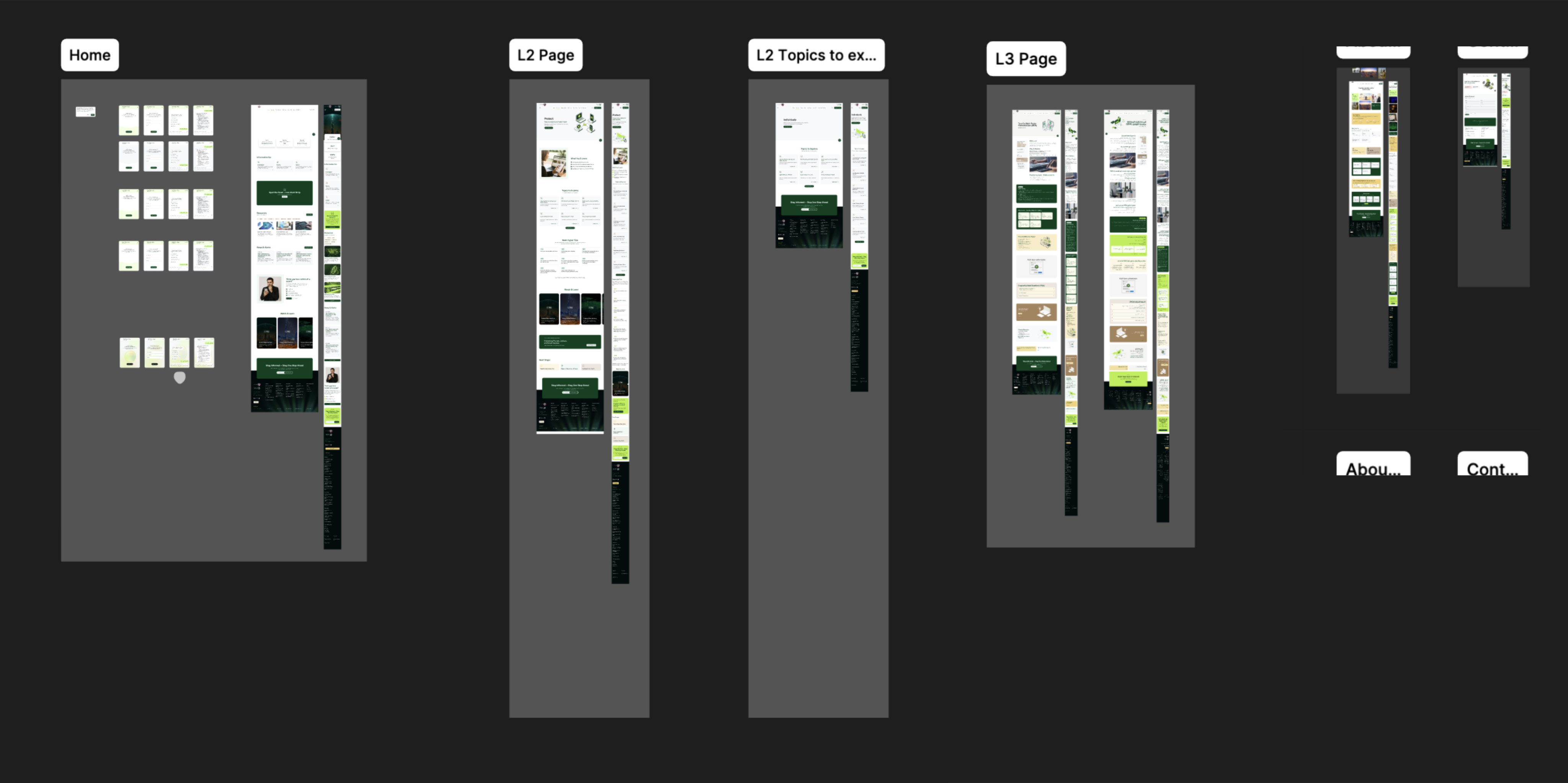
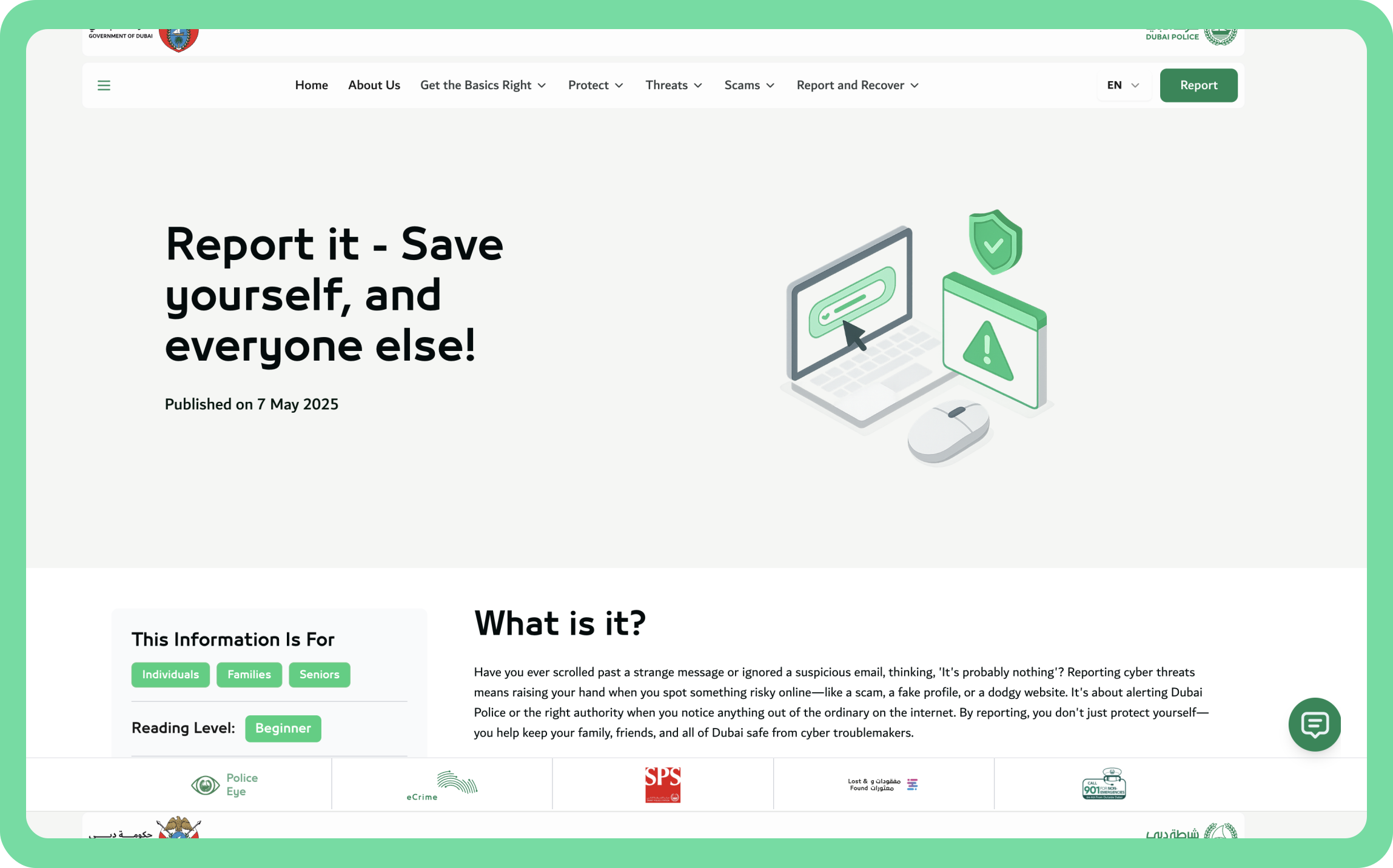
Content-heavy L3 pages use consistent layout for easy comprehension
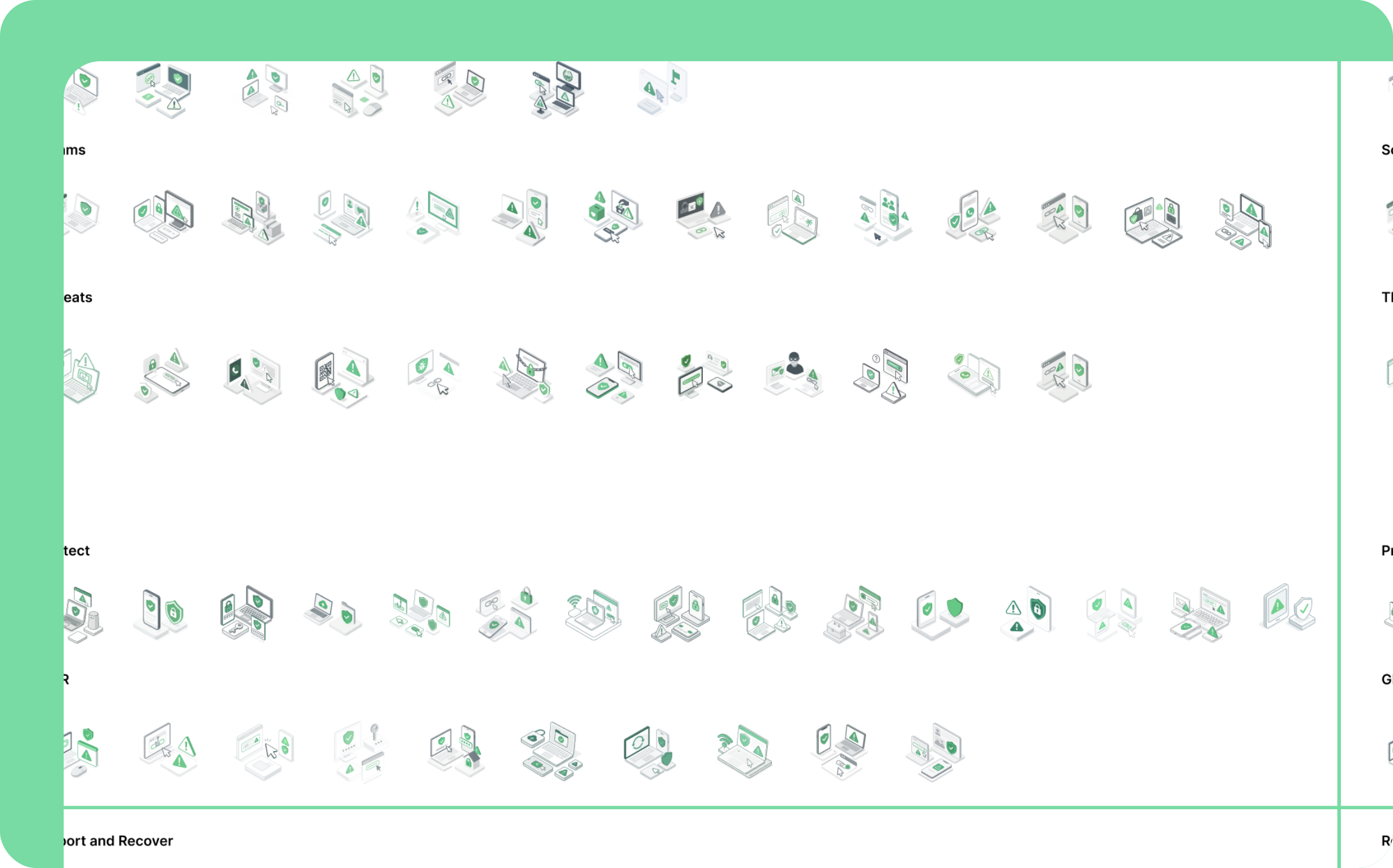
AI-generated illustrations within Dubai Police brand guidelines
The platform was officially introduced through a public launch aligned with Dubai Police's cybersecurity initiatives. The focus was to establish trust, visibility, and a clear path for citizens to report and understand cybercrime.

Following launch, the platform became part of ongoing cybersecurity awareness efforts. Monthly quizzes, public education initiatives, and school programs were introduced to keep citizens informed as cyber threats continued to evolve.
The platform's value is reflected in sustained public participation, growing awareness, and continued institutional trust.


< 3 clicks
Homepage to report
Reduced from 6+ steps on the previous process
40+
Content pages designed
All built from 3 core templates
2
Languages supported
Full Arabic/English parity from day one
Learnings
- Public trust products demand clarity over creativity
- Constraints accelerate better decisions when embraced early
- Education is a critical layer in cybersecurity, not an afterthought
The outcome was not a launch moment, but a system that continues to support the public over time.
Ongoing work includes a dedicated kids portal, interactive education experiences, and continued improvements to reporting flows.


